Regional Oversight Mechanisms and Their Bearing on Chance Calculation Protocols Within Global Interactive Wagering Systems
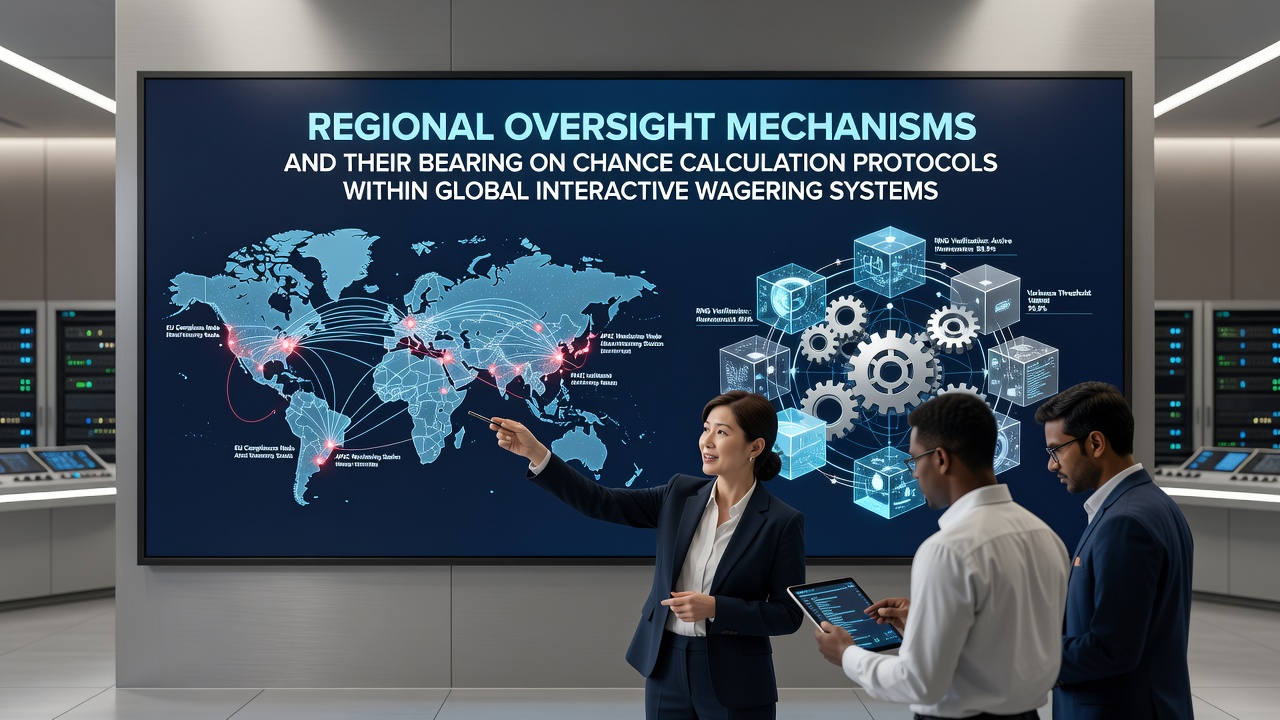
Regional oversight mechanisms shape chance calculation protocols in global interactive wagering systems through certification requirements, testing standards, and compliance frameworks that differ by jurisdiction. These mechanisms determine how random number generators receive approval and how probability models undergo verification before deployment on cross-border platforms.
North American Regulatory Approaches
State-level bodies in the United States establish distinct criteria for random outcome verification, and operators must align their calculation engines with each set of rules before launching services. Nevada's Gaming Control Board requires independent laboratory assessments of algorithm integrity at regular intervals, while New Jersey's Division of Gaming Enforcement adds layers of real-time monitoring that track deviation patterns in live sessions. Data from these agencies indicates that platforms serving multiple states maintain separate RNG instances to satisfy varying audit frequencies.
Canadian provinces apply their own certification pathways, and Ontario's Alcohol and Gaming Commission integrates continuous compliance checks that influence how operators recalibrate probability tables after software updates. Those adjustments ensure that advertised return-to-player percentages remain consistent with regional expectations even as player bases shift across provincial borders.
European and Asian Variations
European regulators outside the United Kingdom coordinate through mutual recognition agreements that standardize certain testing protocols yet leave room for national additions. Malta's authority and Romania's Office of Gambling each impose supplementary statistical sampling requirements that affect how chance sequences receive final sign-off. Operators serving these markets therefore embed modular code structures that accommodate different verification depths without altering core probability outputs.
Asian jurisdictions present another layer of complexity. Singapore's Casino Regulatory Authority mandates on-site hardware inspections for RNG modules, whereas Macao's Gaming Inspection and Coordination Bureau focuses on post-deployment audits that examine historical outcome distributions. These contrasting methods require global platforms to maintain region-specific audit logs that feed into centralized reporting dashboards.

Effects on Algorithm Development and Testing
Software developers respond to this patchwork by building configurable probability engines that accept jurisdiction-specific parameters at runtime. Research conducted at the University of Nevada, Las Vegas shows that such adaptability reduces certification timelines by up to thirty percent when operators expand into new markets. The same studies reveal that failure to map regional rules accurately leads to repeated test cycles and delayed market entry.
Chance calculation protocols must also address synchronization issues when players access services from multiple regulatory zones within a single session. Systems therefore log location data alongside each random draw, and this information supports later audits that confirm compliance with the strictest applicable standard. Industry reports from the European Gaming and Betting Association note that these logging practices have become standard across major platform providers since 2024.
Developments Emerging in Mid-2026
June 2026 brought new reporting mandates from Australia's National Consumer Protection Framework that require quarterly disclosure of RNG performance metrics across state lines. These mandates align with existing Canadian and U.S. practices, and several large operators have already begun publishing aggregated deviation statistics to meet the combined requirements. The change illustrates how regional mechanisms continue to converge on shared data formats even while preserving local testing autonomy.
Observers note that these converging standards simplify cross-border operations without eliminating the need for tailored compliance teams. Companies that once maintained separate engineering groups for each region now consolidate around unified codebases equipped with regulatory switches that activate teh appropriate verification routines based on user location.
Conclusion
Regional oversight mechanisms continue to define the boundaries within which chance calculation protocols operate in global interactive wagering systems. Jurisdictional differences in testing frequency, audit scope, adn reporting formats require platforms to implement flexible yet verifiable systems that satisfy multiple authorities simultaneously. As markets expand and new rules emerge, the interplay between these oversight structures and underlying probability engines remains a central factor in system architecture and operational planning.